Wildlife Tracking Guide
Where to See Tree-Climbing Lions in Uganda: The Ishasha Sector Guide
Deep within the remote southern frontiers of Queen Elizabeth National Park lies Ishasha—a raw savanna ecosystem world-famous for its resident tree-climbing prides. Unlike ordinary lions that stay grounded, these unique predators spend their afternoons draped over the cool branches of ancient fig trees.
Finding these spectacular cats resting high above the grasslands is a bucket-list highlight for safari travelers. Use this expert local blueprint to plan your tracking route and witness the legendary tree-climbing lions of Ishasha alongside local veterans.
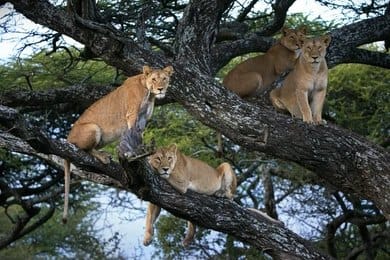
Witness the rare, captivating sight of an Ishasha lioness draping her limbs over a thick sycamore fig branch to escape the midday heat.
1. Why Do Ishasha’s Lions Climb Trees?
While lions around Africa occasionally scale rocks or small mounds, the prides in Ishasha have turned tree-climbing into an ingrained daily lifestyle. Wildlife behaviorists highlight three main reasons for this fascinating adaptation:
- Escaping the Midday Heat: Ground temperatures on the open savanna can become blistering hot. Ascending into the canopy allows the lions to catch cool, refreshing cross-breezes.
- Avoiding Biting Tsetse Flies: Swarms of irritating tsetse flies stay close to the grass roots. By climbing upward, the lions completely protect themselves from continuous insect bites.
- Peak Visual Advantage: Sitting high on thick branches gives the pride a wide, unobstructed view of the plains, making it easy to spot herds of migrating Uganda Kobs and topis.
2. The Best Time of Day for Tracking Tree Prides
Timing is absolutely vital when searching for tree-climbing prides. Lions typically hunt in the cool early mornings and stay grounded in the high brush. The best time to spot them up in the branches is between **11:00 AM and 4:00 PM**, when the sun is high and they seek shelter inside giant sycamore fig and acacia trees.
Ready to Track the Tree-Climbing Prides?
Join an authentic, direct-to-local savanna safari. Explore Ishasha in an open-roof 4×4 cruiser alongside native trackers.Explore Safari Packages ➔3. Photographic Tips for Tree-Lion Safaris
Photographing a large apex predator balancing on a delicate tree limb requires specific camera preparation:
- Pack a Telephoto Zoom Lens: Vehicles must strictly stay on tracking loops to protect savanna roots. A lens ranging from 200mm to 400mm will ensure clean, close-up portraits.
- Adjust for Harsh Backlighting: Lions often sit beneath heavy canopy shade against a bright, blown-out sky background. Adjust your exposure compensation or use spot metering to avoid silhouettes.
- Be Patient and Scan Carefully: A sleeping pride might look like an empty branch at first. Take your time scanning, as a twitching tail or a hanging paw often reveals their location.
4. Crucial Logistical Planning: Connecting Your Route
Ishasha functions as a beautiful geographical bridge between the northern sector of Queen Elizabeth National Park and Bwindi Impenetrable Forest. Instead of driving straight through, an ideal itinerary schedules a dedicated afternoon game drive loop inside Ishasha to break up the journey seamlessly.
Pairing an Ishasha tree-lion track with a morning boat cruise on the Kazinga Channel creates the ultimate balance of savanna wildlife, water birds, and dense primate jungle ecosystems for your holiday.
Ready to Plan Your Custom Savanna Safari?
Skip the hidden corporate agent fees. Talk directly to real local operators who live right here in Uganda to customize your lodging parameters and 4×4 vehicle routes.Secure Your Quote Now ➔